Tuesday, December 23, 2014
New office space
I will now be meeting my Winnipeg clients on Mondays at 3527 Pembina Highway, which is just south of the perimeter in St. Norbert. See you there!!

Tuesday, June 10, 2014
The Empathy of a Dog

Dawson
I recently asked my wife who demonstrates empathy more consistently: me or our dog, Dawson. Without hesitation she said, “Dawson.”
She gently added, “There are times when you show wonderful empathy. But there are other times when you seem clueless about my feelings or you just jump to counseling me. But Dawson picks up on my feelings flawlessly, and when I’m down, he never fails to comfort me.”
Ouch! It looks like I need to take empathy lessons from my dog.
Dogs Are Wired for Empathy
Once I got past my initial embarrassment, I went online to find out if there’s scientific evidence to support Corlette’s unflattering comparison. Surprisingly, there is.
 A recent study using functional magnetic resonance imaging (fMRI) shows that canine and human brains process emotionally-loaded sounds in similar ways (Link1).
In another test where a stranger made distressing sounds, most dogs walked to the person to nuzzle and lick him, which is the canine version of “there there” (see Link2, Link3).
Dogs also watch people closely and pick up on subtle physical cues. Particularly sensitive dogs are used for emotional therapy for distressed children, and some dogs can actually smell chemical changes in the human body and warn people who are about to experience a seizure (Link4).
We don’t understand all of the neurological dynamics that God has built into dogs (and into people) to trigger these types of comforting behaviors. But one thing seems clear: the world would be a better place if more husbands (as well as wives, teens, pastors and bosses) raised their emotional sensitivity at least to the level of our canine friends.
Let’s Grow Together
I’ve already secured twelve months of personal empathy coaching from Dawson (he has no idea how little a box of dog treats costs!). To aid those who want to join me on this journey of personal growth, I’m going to write several blog posts that focus on developing empathy as well as its more active cousin, compassion. Among other things, we’ll be looking at these issues:
- What is the ultimate biblical mandate, motive, and model for empathy and compassion?
- What are some of the neurological dynamics that drive empathy and compassion?
- Can emotionally clueless people really change?
- What are some practical ways to develop empathy and compassion?
- How early can you begin teaching empathy to a child? (Hint: it’s the same age that some people say children become “terrible”)
- How can you teach empathy to children and increase the likelihood that they will grow to imitate the compassion of Christ?
To prepare you for our coming study, I’ll define two key terms and then give you a few questions to ponder in the coming week. First the definitions:
- Empathy is generally defined as the ability to discern and vicariously experience the thoughts and feelings of another person, or more simply, to feel what others feel.
- Compassion, which literally means “to suffer together,” is a deep concern for another person who is suffering, accompanied by a strong desire and concrete action to alleviate that suffering.
Now the Questions:
 In the movie Marley and Me (based on a true story), Jenny Grogan has a miscarriage. Her husband, John, is grieved by their loss as well, but doesn’t know how to comfort her. When they arrive home from the hospital, Jenny sits silently in their living room, with all her grief bottled up inside. Their dog, Marley, comes over and simply puts his head into her lap. Jenny wraps her arms around his neck and overflows with sobbing and tears. What did Marley understand that John didn’t? Did Marley show empathy or compassion?
- Is it biblically valid for humans to learn character qualities from an animal? (see Proverbs 6:6-11; 30:24-25)
- Why should a Christian invest significant effort in developing empathy and compassion? (see Psalm 103:13; Matthew 14:14; Ephesians 5:1; Romans 12:15; Colossians 3:12; 1 Peter 3:8).
- Watch this short clip from Marley and Me with pen and paper in hand, and write down all of the thoughts and emotions John and Jenny seem to experience as they interact with their dog. (A key step in developing empathy is to learn how to read the facial expressions and body language of others and imagine what they are experiencing, thinking, and feeling.)
If the video screen does not appear, click here.
Over the next few weeks, we’ll consider all of these questions and issues, and, by God’s grace, improve our ability to exercise the empathy and compassion that God designed us to show toward other people.
- Ken Sande
Permission to distribute: Please feel free to download, print, or electronically share this message in its entirety for non-commercial purposes with as many people as you like.
© 2014 Ken Sande
Monday, May 19, 2014
Four Ways to Defeat Hijacking
In last week’s blog, we considered a neurological/emotional process known as “hijacking.” This week we will look at four steps to defend yourself from this problem.
But first, let me illustrate the behavioral signs of hijacking with a short clip from the movie, Cinderella Man.
In this scene, Mae Braddock is struggling with a deep fear that her husband, James, is going to be killed in an upcoming boxing match with Max Baer, who has reportedly killed two men in the ring. Watch how Mae’s emotions overpower her in this scene (click here if viewing on an iPad).
Mae’s outburst at her children demonstrates the three classic signs of “amygdala hijacking”: (1) the sudden onset (2) of an intense emotional reaction (3) that is later regretted.
Part of this dynamic can be traced to tensions between different parts of the brain, which no longer function as seamlessly as God originally designed them.
Competition in the Brain
Last week we noted that because of the way the brain is wired, sensory impulses arrive at the limbic system, where emotions are centered, a few nanoseconds before they get to the neocortex, where rational thinking is located. This means that our emotions can get rolling before we are able to rationally process critical information.
Using functional neuroimaging, a team of neuroscientists led by Matthew Lieberman discovered another competing relationship between the amygdala (a central part of the limbic system) and the neocortex.
They found that when the amygdala is highly stimulated with intense emotions, it utilizes more blood and oxygen than normal, leaving less of both for the neocortex. This deficit causes a corresponding decrease in our capacity for reasoning, problem solving, and impulse control. This can lead to a temporary loss of 10 to 15 IQ points!
Yes, you really do get dumber when you’re highly emotional.
So when someone asks, “What were you thinking?” after an emotional outburst, part of your answer can be, “I was thinking with a lot less brain power than I normally have at my disposal.”
Practical Defenses Against Hijacking
Realizing that emotional hijacking makes it difficult to think clearly, our ministry has developed a fewsimple acrostics to make it easier for you to manage your words and actions wisely in stressful situations.
One of these acrostics is set forth in this principle: “To become more self-aware and self-engaging,READ yourself accurately.” This acrostic summarizes four key steps that can help you resist hijacking:
- Recognize your emotions
- Evaluate their source
- Anticipate the consequences of following them
- Direct them on a constructive course
Recognize – What am I feeling?
Neuroimaging as well as practical experience have shown that labeling emotions can help to reduce their intensity and shift more of their management back to the prefrontal cortex.
For example, in a study conducted by Dr. Lieberman, when people attached a word like “angry” to an angry-looking face, neuro-activity in the amygdala, which processes fear, panic and other strong emotions, decreased significantly. This dampening effect was accompanied by a corresponding increase of activity in the neocortex, which controls impulses.
Recognizing and labeling emotions also helps us to pull them out of the shadows and identify those that pose risks to our relationships. Just as pneumonia is a more dangerous illness than a common cold, bitterness is more dangerous than disappointment, self-pity can lead to more problems than sadness, and fear can be more crippling than concern.
So it is important to practice looking into our own hearts and accurately applying labels such as sad, discouraged, depressed, angry, lonely, embarrassed, rejected, bitter, jealous, and self-pity, to name a few.
If you’re not used to doing this, a way to practice identifying emotions is to read a novel or watch a movie and constantly ask yourself, “What is that character feeling?” As you get better at reading emotions in others, you’ll get better at reading them in yourself.
Evaluate – Why am I feeling this emotion?
The next step is to ask yourself, “Why am I feeling this way?” Asking these kinds of questions helps to move your thought process from the amygdala to the neocortex.
When I’m attempting to override a hijacking, I actually visualize grabbing my thoughts with both hands and dragging them from the back of my brain to the front of my brain, where my prefrontal cortex (and reasoning capacity) is located.
That’s also where all my sermon applications, memorized Scriptures, and lessons learned the hard way are stored, which is exactly what I need to draw on in order to defeat emotional hijacking.
More importantly, asking yourself why you’re feeling certain emotions helps to identify the circumstances and desires that are driving them, which is a crucial step toward controlling them (see James 4:1-3; Matt. 15:18).
The process looks like this: “I’m feeling angry. Why? Because Corlette just questioned my judgment. Why does that bother me so much? Because I’m proud and want her unqualified trust, respect, and support. Why else? Because I’m busy and I’m lazy and don’t want to spend more time explaining myself to her.”
Or, “What am I feeling? Self-pity. Why? Because I work my tail off for my family and make all sorts of sacrifices for them. And here when I needed just a little bit of support from them, they say they’re too busy. It’s just not fair. Really? So why have you been serving them all along, to put them in your debt?” Ouch!
As we dig into the depths of our own hearts in the middle of intense emotional times, we will often find that God is using the situation to free us from the grip of sinful desires and passions.
Anticipate – What are the likely consequences if I give in to this emotion?
Here again we are making a conscious effort to move our brain activity from the emotional zone to the reasoning zone. We draw on memories, experience, and learning by asking, “What is likely to happen if I give in to these emotions?”
It looks like this: “If I give into my anger, I’ll become defensive and say harsh things to Corlette, which will make her feel guilty and disrespected, and reluctant to voice questions or concerns in the future, which would not only hurt her but also undermine our ability to work as a team.”
Or, “If I give into self-pity, I’ll withdraw from my family and give them the cold shoulder. I’d like to label that as a defense mechanism, but the hard truth is that it’s simply a way to punish and manipulate them for not treating me the way I want. That will only build walls and distrust between us.”
“But worst of all, these reactions will offend my loving God who sent his Son to free me from these very sins.”
You’ll find equally uncomfortable but course-changing mental conversations when the emotions in question are bitterness, envy, jealously, depression, or hopelessness.
Direct – How can I channel my emotions onto a constructive course?
Although emotional hijacking can be almost instantaneous, these defense mechanisms take time. So what do we do to gain this time?
Buy some time. As I mentioned last week, one of the simplest anti-hijacking techniques is to always have a bottle of water or cup of coffee in front of you in any meetings or conversations that could become emotionally volatile. Make a firm resolution that you will not respond to an irritating or offensive comment without first taking a sip of water or coffee. The six seconds it takes to do so will usually give your neocortex time to catch up with your amygdala.
Another way to buy some time is to simply ask for it. “You know, this is really important to both of us, so I’d like to take a few minutes to walk around the block and think about our options.” Or, more simply, “We’ve been talking quite a while, and I need to take a bathroom break.”
Oxygenate. Slow down the conversation and breathe deeply. In emotional situations your brain is working intensely and using up a lot of oxygen. Be deliberate in replacing it. Your mother probably never heard of neuroimaging, but somehow she knew that counting to ten was always a good thing.
Rejoice in the Lord … and remember that he is near. This is a discipline the apostle Paul urged the Philippians to practice when they were wresting with a conflict: “Rejoice in the Lord always; again I will say, rejoice. Let your reasonableness be known to everyone. The Lord is at hand” (Phil. 4:4-5). It’s difficult to have two strong emotional experiences simultaneously, so rejoicing in God—remembering his character, works, and promises—is an excellent way to counteract strong negative feelings about another person.
Pray. Paul goes on in Philippians to teach, “Do not be anxious about anything, but in everything by prayer and supplication with thanksgiving let your requests be made known to God” (Phil. 4:6). In addition to appropriating God’s grace, prayer moves your thoughts off of what is provoking you and centers them on God himself … which should put worldly issues in a clearer context.
Be thankful. Since it’s difficult to entertain competing emotional experiences at the same time, being thankful is another way to counter a hijack (see Phil. 4:6). While it’s especially effective to be thankful for the person you’re talking with, other kinds of thankfulness can be helpful … whether it’s thankfulness to God for his many kindnesses to you, or thankfulness for other people he’s placed in your life.
Learn from your mistakes. If you are hijacked, get a benefit from it. After your emotions cool, spend some time reflecting on what happened and why. Identifying the trigger for that event can help you be better prepared when you face a similar situation in the future.
There are no panaceas. Since we live in a fallen world, we will always be faced with the challenge of mastering our imperfect minds and emotions. But if you practice the spiritual principles that are summarized in the READ principle, you can steadily improve your ability to head hijacking off at the pass, and channel the power of your emotions into constructive words and actions.
This truth is beautifully illustrated in another clip from Cinderella Man, after Mae has spent time doing the kinds of things described above (in real life, she was a devote Christian). Watch what happens when she uses all of her mental and emotional gifts to bless her husband before he heads into the ring (clickhere if viewing on an iPad).
An excellent illustration of the anti-hijacking principle God gives us in Philippians 4:4-7:
Rejoice in the Lord always; again I will say, rejoice. Let your reasonableness be known to everyone. The Lord is at hand; do not be anxious about anything, but in everything by prayer and supplication with thanksgiving let your requests be made known to God. And the peace of God, which surpasses all understanding, will guard your hearts and your minds in Christ Jesus.
- Ken Sande
Reflection Questions
- Think of a time when you were emotionally hijacked? What triggered your intense feelings? What did they cause you to do? What was the result?
- Describe how that situation might have unfolded if you had practiced four steps in the READ principle.
- Which of the READ disciplines will you focus on developing in the next thirty days? Share our goal with a friend who will pray with and support you.
Permission to distribute: Please feel free to download, print, or electronically share this message in its entirety for non-commercial purposes with as many people as you like.
© 2014 Ken Sande
Monday, May 12, 2014
Hijacked
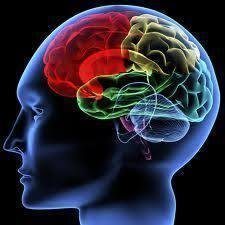 Peter, James, and John were hijacked. So was Paul.
The same was true of Abraham, Sarah, Isaac, and Rachel … even David, the man after God’s own heart.
Chances are that you’ve been hijacked too. Probably within the last week.
It has nothing to do with being on an airplane. It has everything to do with having a marvelously complex and yet defective brain.
In simple terms, hijacking occurs when the emotional part of your brain (the limbic system) overpowers the rational part of your brain (the neocortex) … and gets control of your whole body along with it, including your mouth.
Think, for example, of a time when you hit your thumb with a hammer and blurted out an expletive … only to remember a moment too late that your five-year-old daughter was standing by your side.
Or a time when someone said something that offended you, so you threw a sarcastic comment back at him … only to wish later that those words had never left your mouth. It’s bad enough when this happens in private; it’s so much worse when it’s done during a congregational meeting.
Hijacking Can Be Humorous
Sometimes hijacking is funny. Like the time my daughter wrote all over a wall and her own face with lipstick. Although the evidence against her was conclusive (and a quick confession would have been wise), when asked how the wall got all red, fear of admonishment led her to say, “I don’t know.”
We also smile when we read the account of a servant girl named Rhoda in the book of Acts. Peter had just been miraculously released from prison and was knocking on Rhoda’s door. Note how her emotions overpowered rational thinking: “Recognizing Peter’s voice, in her joy she did not open the gate but ran in and reported that Peter was standing at the gate” (Acts 12:14).
Hijacking Is Often Harmful
Unfortunately, hijacking is usually not funny. When we are overtaken by emotions like anger, jealousy, lust, or fear, we often respond impulsively and say or do things that hurt other people, damage our relationships, trigger long-lasting shame, and weaken our witness as followers of Christ.
Like James and John when their anger flared and they sought to bring down fire on the Samaritans because they would not welcome Jesus (Luke 9:51-55).
Or Joseph’s brothers, when jealousy drove them to sell him into slavery (Gen. 37:11; 27-28).
Or David, when lust led to seduction, pregnancy, manipulation, and murder … and eventually to civil war (2 Sam. 11:1-17; 2Sam. 12:11-15).
Or Peter, when fear compelled him to deny Jesus three times … which he deeply regretted within moments (Luke 22:54-62).
Sin-Damaged Brains
When we read these biblical narratives, we typically explain them by simply saying, “They sinned.”
That’s true, but painting with such a broad brush robs us of a full understanding of the problem and an effective plan of action.
Sin is definitely central to these harmful dynamics, but its impact is far more nuanced than most of us realize. Let’s look at this from both a theological and neurological perspective.
At creation, God made us in his image (Gen. 1:26). Among other things, this means he designed our minds to function perfectly in every situation, no matter what kind of stress we might be feeling. The limbic part of our brain, where emotions and motivations are centered, was designed to work in perfect harmony with our neocortex, where rational thinking and decision making takes place.
But sin threw this beautifully designed system out of whack. Instead of meshing smoothly, the various parts of our brain sometimes get out of synch. Emotions, desires and passions can get so intense that they compel us to do things we know are wrong and will soon be regretted (see Rom. 7:18-19; James 4:1-3).
A Matter of Nanoseconds
Part of what goes wrong in these situations (and this is only one part) has to do with the wiring of our brains, which no longer works as perfectly as God initially designed it. So here’s what happens …
Data from our senses enters the brain through the thalamus, which relays impulses to other parts of the brain. Due to small differences in the distances to be traveled, impulses arrive at the limbic system a few nanoseconds before they get to the neocortex. This means that our emotions can get rolling before we are able to rationally process the information.
Simple illustration. My wife is terrified of snakes. If we were walking along a high mountain cliff and she saw a small garter snake beside the trail, she would probably scream and leap ten feet out into thin air before her neocortex reminded her that she can’t fly. But by then it’s too late.
Saved by a Water Bottle
Next week we’ll look at several ways to guard against hijacking. But let me leave you with a simple illustration today.
I once counseled a man who frequently got himself into trouble at work by speaking impulsively during business meetings. If he was irritated, surprised, or simply wanted attention, he would throw out little sarcastic comments that steadily eroded his credibility and relationships. He wanted to stop but the little jabs just kept on coming.
Although a thorough solution would require a prayerful examination of his heart (Matt. 15:19), I gave him some immediate help simply by advising him to always take a water bottle or cup of coffee into his meetings … and to never say a word until he had raised the bottle or cup to his lips and taken a sip.
The six seconds required to take a sip gave his brain time to work around his emotional impulses and get a message up to the neocortex, where his higher reasoning powers had time to evaluate the situation and send an overriding message to his mouth: “I really don’t need to say this.”
Not very fancy, but it worked. And that little bit of progress motivated him to pursue the more comprehensive solutions we’ll look at in next week’s blog.
– Ken Sande
Reflection Questions
- Describe how each of these individuals was hijacked (What emotions overpowered them and what irrational decisions did they make?): Cain (Gen. 4:1-8); Abraham (Gen. 12:10-13); Sarah (Gen. 18:9-15); Isaac (Gen. 26:6-7); Rachel (Gen. 31:17-19); Joseph’s brothers (Gen. 37:11; 27-28); David (1 Sam. 25:1-13; 2Sam. 11:1-5); James and John (Luke 9:51-55); Peter (Luke 22:54-62); Paul (Acts 23:1-5).
- When was the last time that you were hijacked? What emotion overpowered you? What irrational decisions did you make? What was the result of those decisions?
- When are you most vulnerable to hijacking?
- If you could learn to handle one key situation in a consistently rational and godly way, what would it be?
Permission to distribute: Please feel free to download, print, or electronically share this message in its entirety for non-commercial purposes with as many people as you like. If you wish to adapt the questions to better suit your group, please include a parenthetical note (Questions adapted with permission of RW360) and send a copy to mail@rw360.org.
© 2014 Ken Sande
Monday, May 5, 2014
Look Up
“I have four hundred and twenty-two friends, yet I’m lonely.”
So starts a video clip that’s been viewed six million times in just one week—and stirred up some intense disagreement along the way.
This clip has a lot to say about relationships … or the lack thereof. So I encourage you watch it and then reflect on some questions that could change your life.
Reflection Questions
I encourage you to discuss these questions with your family and close friends, because they are the first people you’ll see if you decide to “look up.”
- What are some of the benefits you have personally experienced through the modern social media you can access through your computer, tablet, and smart phone?
- What undesirable or detrimental effects has the use of these devices had on your life?
- How do you see these devises affecting your relationships?
- Studies show that empathy levels among college students have dropped by 40% in the last ten years, while bullying incidents have increased, both on and off school campuses. How might this be related to the increased use of electronic communications?
- A Pew foundation study shows that 40% of young people prefer texting and video chats over meeting in person. One out of two young people believe it’s OK to end a close relationship with a text message. Why do you think this is?
- What do we miss out on when we communicate through text messages, emails, Facebook, or cell phones? What skills are we often failing to exercise and develop? How could this affect our long-term relationships and job performance?
- What are you more likely to say at the end of your life: “I wish I’d spent more time on my iPhone” or “I wish I’d turned off my iPhone more often and spent more time talking and laughing face-to-face with my family and friends”?
- Which of the following disciplines would you like to develop in your personal, family, or work life? (1) Unless I’m expecting a vital message, I will not allow a text message or phone call to distract me from a personal conversation or meeting (which may require me to silence my phone or leave it in another room if I can’t avoid checking it). (2) I will not use text messages and emails to convey emotional information. (3) As a family, we will all silence our phones and leave them on a counter when sharing a meal, having a significant conversation, or watching a movie together. (3) I will turn my mobile phone off (or at least my email and texting features) in the evening so I can enjoy my family without distraction. (4) I will take a “technology fast,” periodically disconnecting from all non-critical electronic communications for a [day] [weekend] or [week long vacation].
- What else might you do to make sure you and your family are using electronic in a way that strengthens rather than weakens your relational skills?
Permission to distribute: Please feel free to download, print, or electronically share this message in its entirety for non-commercial purposes with as many people as you like. If you wish to adapt the questions to better suit your group, please include a parenthetical note (Questions adapted with permission of RW360) and send a copy to mail@rw360.org.
© 2014 Ken Sande
Monday, April 28, 2014
Seven Facts About Emotions
This three minute video clip has been viewed by over four million people. Watch it and you’ll see why.
This short clip captures something that is common to all people at all times in all cultures: the power of emotion.
Emotions drive most of what goes on in this world. Whether it’s the desire of a man to win the heart of a special young lady, the sacrificial love of a parent for a child, the bitterness that corrodes a friendship, or the anger that fragments a family or church, emotions play a powerful role in every aspect of life.
And yet most of us know almost nothing about the origins and dynamics of our emotions. We seldom hear practical sermons about emotions, and when we do, we usually walk away with the sense that emotions are generally untrustworthy and sinful.
This shallow understanding cripples our ability to enjoy life, resist sin, and enjoy deep and authentic relationships.
Let’s begin to deepen our understanding by taking a quick look at seven basic facts about emotions.
First, emotions are built into all people in all cultures by God’s design. They are hardwired into our brains and bodies through the neurological and hormonal systems that he designed at creation and weaves into every baby as he forms it in the womb (Gen. 1:26-27; Ps. 139:13-14).
Second, emotions are physiological experiences that involve measurable neural, muscular, respiratory, hormonal, and cardiovascular changes that impact our thoughts and move us to action (Exod. 32:19; 2Sam. 18:33; Mark 1:41).
Third, emotions provide some of our greatest pleasures in life, such as love, joy, delight, acceptance, compassion, belonging, and peace, to name just a few. These emotions are found in both saved and unsaved people, and drive some of our most noble and constructive behavior (Exod. 2:5-6; Dan. 1:9).
Fourth, emotions are also tied to our greatest struggles and agonies in life, which often involve negative feelings such as sadness, embarrassment, anger, bitterness, jealousy, self-pity, and regret (Gen. 37:11; Matt. 27:3-5).
Fifth, emotions are not inherently sinful. Jesus felt a wide range of emotions, including love, compassion, joy, pity, anger, sorrow, and agony (John 11:5; Matt. 14:14; Heb. 12:2; Mark 1:41; Mark 3:5;Mark 14:34; Luke 22:44). Yet he never sinned (1 Pet. 2:22). His emotions never surprised or overwhelmed him or moved him to act contrary to his Father’s perfect will (John 8:29).
Sixth, human emotions are often twisted by sin. Because of the fall, sin has corrupted our whole being, including our minds, emotions, and will. Therefore, like a computer with a defective motherboard, we are unable to consistently understand and control the emotions that are triggered by people and events in our lives (Gen. 3:6-13; Jer. 17:9; Eph. 4:22). Therefore, while positive emotions usually move us to do good things, negative emotions often move us to sin against God and one another (Gen. 37:11; 2Sam. 11:2-4; Ps. 73:21-22).
Seventh, through the gospel, God has redeemed us from the curse of sin, made us new creations (which impacts our minds, emotions, and will), and is now pouring his grace into us, giving us the ability to understand our emotions and progressively bring them under the Lordship of Christ (Ezek. 36:25-27; 2Cor. 5:17; Titus 2:14; Rom. 12:2; 2Cor. 3:17-18).
In the weeks to come, I will be sharing other basic facts about emotions, including insights into the neurology of our emotions and the principles God has given to us through Scripture to help us understand and master our emotions.
Until then, I encourage you to read this more detailed article, Emotion in Christian Anthropology, and then work through the following discussion questions with a friend to strengthen your ability to harness the power of emotions in your life.
– Ken Sande
Reflection Questions
- Read each of the Scripture passages cited in this post (they will show up on your screen if you simple place your cursor over each citation). There are hundreds more like them. Did you realize that the Bible talks so much about emotions? Why do you think God caused the prophets and apostles to write so much about emotion?
- What has been your understanding of and attitude about emotions? Did you realize that they were designed by God as an inherent part of our neurological system and woven by his hand into every human being on the face of the earth? Have you thought that all emotions are inherently sinful? Should we try to simply stifle them and be governed by thought and will power, or can emotions provide something positive that can actually enrich and empower our lives in positive ways?
- Watch the video clip again. Write down the emotions that fragment this family, as well as the emotions that pull it back together. Note what emotions you feel as you watch the film. This is a way to improve your ability to empathize with and feel compassion toward other people (something Jesus modeled throughout his ministry, Matt. 14:14; Matt. 15:32).
- Read Emotion in Christian Anthropology. What surprised you as you read this article? What practical insights did you gain? How will you view emotions differently in the future? What do you want to do with your emotions from now on?
Permission to distribute: Please feel free to download, print, or electronically share this message in its entirety for non-commercial purposes with as many people as you like. If you wish to adapt the questions to better suit your group, please include a parenthetical note (Questions adapted with permission of RW360) and send a copy to mail@rw360.org.
© 2014 Ken Sande
Monday, April 21, 2014
Face to Face and No Excuses
 Someone on my team had blown it. Not ethically or morally. He had simply taken too long to complete some significant tasks, which put one of our clients in an awkward position in a mediation case.
It wasn’t my mistake, but since the “buck stops here,” I knew I had to be the one to repair the damage. So I picked up my phone and dialed our client’s number to apologize for our failure to serve him well.
Before the phone rang twice, however, I hung up.
Even though the damage seemed to be minor in my eyes, it dawned on me that our client could easily see this as a major problem. Therefore, it called for a face-to-face conversation.
So I booked a flight the next day and called the client to ask if I could take him to lunch to apologize personally for what had happened. His guarded response confirmed that this was no small matter to him.
When I walked into the restaurant the following day, I saw our client, an attorney himself, flanked by two of his staff attorneys. He apparently suspected that I might try to shift the blame or minimize the damage. So he brought “the troops” to back his case.
My gut tightened up a bit, so I prayed that God would give me grace not to become defensive or competitive (two of my most natural reactions in a situation like this).
We exchanged pleasantries as we scanned the menu and placed our orders. Then after a moment of awkward silence, I moved into a “Seven-A Confession.”
I acknowledged our failure to administer the case in a timely manner. Although I was sorely tempted to point out how he had caused several major delays himself, and also how obstructive the other party had been, God helped me to avoid making any excuses whatsoever.
Instead, I admitted our mistakes in detail and acknowledged how they had probably impacted the client, both emotionally and substantively. Finally, I offered a solution to get us back on track … plus a commitment to waive our entire fee if he was not completely satisfied with the outcome of the process.
He was clearly stunned. As he glanced at his colleagues, they showed the same surprise.
Once he collected his thoughts, he told me he had expected me to make excuses and downplay the seriousness of the delays. So they had actually spent an hour at their office that morning preparing a counterattack. My unqualified confession caught them totally off guard.
The mood at the table changed dramatically. The tension evaporated, bodies relaxed, smiles become more natural, and we all switched off “attorney mode.”
In response to my no-excuses apology, the client actually started making excuses for me (a perfect example of “the Golden Result”). He admitted that they had failed to give timely responses on two critical exchanges, and he pointed out that the other party was consistently late in his responses.
As tempting as it was to minimize our failure by agreeing with him, I said, “I appreciate that. But it’s actually beside the point. As a Christian ministry we are committed to serve you with excellence regardless of others’ actions. We failed to do that, and I’m here to do whatever it takes to make things right with you.”
After a short, congenial tug-of-war as to who was most responsible for the delay, we both laughed out of pure relief. We were not going to be adversaries. We didn’t need to use our adversarial skills against each other. We could relax and work together to find a solution that moved us in the direction we all wanted to go.
Face-to-face. No excuses.
It’s often the fastest way to turn a conflict into an opportunity to build a closer relationship.
– Ken Sande
Reflection Questions
- Deuteronomy 34:10 says, “There has not arisen a prophet since in Israel like Moses, whom the LORD knew face to face.” What is the significance of the words “face to face”? What relational wisdom principle can you learn from this?
- Read the account in Genesis 33 of Jacob reconciling with his brother Esau (after tricking him out of his birthright). What took place in their face-to-face meeting that would not have happened if Jacob had instead written a letter or sent an emissary to talk with his brother?
- When King David pardoned his son Absalom for murdering his brother, David refused to meet personally with Absalom for two years. As 2 Samuel 14:24 reports, “The King said, ‘He must not see my face.’ So Absalom went to his own house and did not see the face of the king.” This prolonged isolation resulted in Absalom leading a rebellion against his father. How did David’s refusal to meet face-to-face contribute to his son’s bitterness and rebellion?
- Why are face-to-face meetings usually more effective when dealing with significant personal issues? Why are they better than texting, emails, letters, or even phone calls? What wisdom principle can you learn from this? Is there someone with whom you could apply this principle today?
- Why are we usually tempted to make excuses or blame others when we are apologizing for something we’ve done?
- How does excusing and blaming destroy the effectiveness of a confession?
- Is there someone who deserves a “no excuses” confession from you? Go and meet together today … before you think of a reason to delay!
Permission to distribute: Please feel free to download, print, or electronically share this message in its entirety for non-commercial purposes with as many people as you like. If you wish to adapt the questions to better suit your group, please include a parenthetical note (Questions adapted with permission of RW360) and send a copy to mail@rw360.org.
© 2014 Ken Sande
Get this from a friend? Subscribe now!
Subscribe to:
Posts (Atom)