Saturday, January 16, 2016

Christian Counselling Awareness Month

February 2016 is the month that counselling and psychology from a Christian faith perspective is being highlighted in towns and cities across the country. Many individuals have experienced the benefits that counselling brings, but for others there is still a stigma attached in seeking help through counselling. Christian counselling in particular is sometimes misunderstood. So what is counselling? What are the hallmarks of Christian counselling? And what is a Christian counsellor?
Counselling provides a confidential setting in which an individual, couple or family can explore any challenges they experience in their emotional, mental or spiritual lives. This takes place with a trained professional who works collaboratively and respectfully with clients. The counsellor directs the conversation and provides tools and understanding in such a way that clients gain hope and experience positive change as they work toward achieving their goals. Some of the topics discussed include the following
issues: stress; anxiety; depression; addictions; trauma; grief; relationship or family issues; etc.
Christian counsellors are held to the same high standards of
professionalism, competence, respect for clients, continuing education, and ethical standards as secular counsellors. However, Christian counsellors additionally hold a Christian faith perspective. Therapy is therefore based on biblical principles and integrates psychology.
Christian counsellors also counsel from a holistic perspective,
acknowledging the spiritual aspect of client’s lives. They respect whatever faith tradition clients may or may not come from, and will not impose their personal beliefs on clients. Christian counsellors are also willing to incorporate a Christian faith and or prayer into the counselling sessions if requested by the client.
A good place to find hope and to begin your journey of change is:
www.paccp.ca

Wednesday, December 23, 2015

Forgive Like Edison, or Better Yet, Jesus

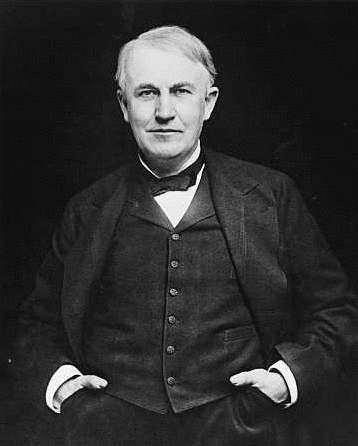
Edison orgThomas Edison never claimed to be a Christian, but he did a better job of demonstrating forgiveness than many believers do.
When Edison and his staff were developing the incandescent light bulb, it took twenty-four hours to manufacture a single bulb. One day he handed a new bulb to a young errand boy and asked him to take it upstairs to the testing room.
As the boy turned and started up the stairs, he stumbled and fell, and the bulb shattered on the steps. Instead of rebuking the boy, Edison reassured him and then turned to his staff and told them to start working on another bulb.
When it was completed a day later, Edison demonstrated the reality of his forgiveness in the most powerful way possible. He walked over to the same boy, handed him the bulb, and said, “Take this up to the testing room.”
Imagine how that boy must have felt.
He knew that he didn’t deserve to be trusted with this responsibility again. Yet, here it was, being offered to him as though nothing had ever happened. Nothing could have restored this boy to the team more quickly, more convincingly, or more fully.

Are You Being Outwitted by Satan?

How much more should those of us who have experienced reconciliation through Christ be quick to use visible, personal actions to demonstrate forgiveness and restoration!
This is what the Apostle Paul taught the Corinthians after they had disciplined a member of their church. When Paul learned of this man’s prolonged censure, he exhorted the elders to immediately and publicly forgive and restore him:
This punishment by the majority is enough, so you should rather turn to forgive and comfort him, or he may be overwhelmed by excessive sorrow. So I beg you to reaffirm your love for him … so that we would not be outwitted by Satan; for we are not ignorant of his designs (2 Cor. 2:6-11).
The word translated as “reaffirm” in this passage means “to make valid, ratify, or impart authority or influence.” Thus Paul was instructing the elders of the Corinthian church to formally declare with explicit words and visible actions that this repentant brother’s sins were forgiven and that he was to be fully restored to body life.
Paul adds a sense of urgency to this teaching by reminding the Corinthians that Satan is always looking for ways to outwit the church by playing on strained relationships.
Sadly, both then and today, individual Christians and entire churches often play right into our enemy’s hands. Wanting to look spiritual, we say we forgive others, but all too often we don’t follow up with actions that demonstrate a desire for a genuinely restored relationship.
Instead, we hold others at a distance, either out of insensitivity or to continue their punishment or to force them to prove their repentance or earn our forgiveness. Before long, many of them give up hope of genuine reconciliation and drift away, giving Satan the satisfaction of another fractured Christian relationship that discredits the gospel (John 13:34-35).

Forgive Like Jesus

Edison’s example of forgiveness is admirable, but Jesus far outshines him, not only in the transcendent, eternal price and impact of the gospel but also in very practical, personal ways.
In perhaps the best known parable Jesus taught, the prodigal son’s father runs eagerly toward his boy at the first sign of repentance, throws his arms around him, and lavishes him with every visible sign he can think of—hugs, kisses, robe, ring, fattened calf, community banquet—to publicly prove and proclaim their fully restored relationship (Luke 15:20-24).
In a far more astonishing and personal example, Jesus publicly restored Peter (who had denied Jesus three times at his most desperate hour) by reaffirming his apostolic position and special calling to lead the building of the church (John 21:15-17).
These examples, parables, and commands give us a clear path to follow.
So the next time you have the opportunity to forgive someone who has repented of a wrong, look him in the eye and with genuine warmth and love speak these hope-giving words, “I forgive you.”
And then back up your words with actions.
Whether you embrace or shake a hand, offer a material gift (robe or ring), host a family meal or public celebration (fattened calf), or publicly reaffirm someone’s gifting and calling (light bulb or ministry), make every effort to restore the relationship in a way that fulfills God’s command to “forgive each other just as in Christ God forgave you” (Eph. 4:32).
– Ken Sande
Reflection Questions
  • Have you ever been estranged from a person or group that refused to be genuinely reconciled with you? How did it feel? How did you respond?
  • Why is it that Christians often fail to carry out this crucial restoring process?
  • Why are many non-Christians more forgiving than those who claim to trust in Jesus? (see Common Grace: Exploring Relationships with Non-Christians)
  • How does a right understanding of the gospel provide the motivation, pattern, and power to genuinely restore broken relationships?
  • How can making and keeping the “Four Promises of Forgiveness” help to restore a relationship?
  • Is there a repentant person you’ve been holding at a distance, either deliberately or simply because you were insensitive to their desire for reconciliation? Go to that person today and imitate the restoring love of Christ with concrete and visible actions.
  • See this excerpt from The Peacemaker for guidance on the related concepts of confession, repentance, discipline and accountability, restitution, and protecting others from unrepentant people.
Permission to distribute: Please feel free to download, print, or electronically share this message in its entirety for non-commercial purposes with as many people as you like.
© 2015 Ken Sande

Friday, December 18, 2015

Penetrating Barriers

Megan had switched on a force field that put the Starship Enterprise to shame.

It had been another one of our difficult home-schooling days. Our then ten-year-old daughter was once again trying to control her younger brother. He resentfully pushed back, indicating he didn’t need a second mother. Corlette tried to suppress their bickering, but before long her teaching schedule was in shambles.
Girl Pouting emAs I listened to their verbal sparring from another room, I realized that Megan was the major culprit that day. Playing the role of school principal, I took her into an adjacent bedroom to talk. As I sat down on the bed, she lay down on the floor at my feet, propping her head against a nightstand. She crossed her arms, and her body went rigid.
I could almost see the force field she had erected to fend off the impending lecture. Sensing another futile engagement, I silently prayed, “God, please help me figure out how to get through to her.”
A new approach came to mind. I gently asked her, “Megan, if Jesus were here, what do you think he would say to you?”
“Stop controlling your brother!” she sneered. She knew exactly what kind of lecture I would normally give at a time like this. But I was already on a different track.
“Well, he might get around to that eventually,” I responded, “but there’s something much more important he would say to you first.” I paused for a few moments to let her emotions cool.
“If Jesus were here right now, I think he would say this.” (Scriptures added for the benefit of the reader.)
Megan, I love you. I love you more than you can possibly imagine. I love you so much that before the world even began, I looked down through time and saw you, and I said, “You are mine.” (Eph. 1:4-6)
And then I made this beautiful world, with oceans and trees, and puppies and flowers … all the things I knew you would enjoy. At just the right time, I brought you into this world. I made you exactly the way I wanted you, with all your special gifts and senses to enjoy my creation. And I adopted you into this particular family, because I knew you’d be loved here, and you’d learn about my love for you. (Gen. 1:1-31Ps. 139:13-16Matt. 10:29-30)
But I also knew that you would have arguments with your family and you would struggle with sin. I knew that those sins would ruin your life and separate you from me for eternity. I didn’t want that … because I love you. (James 4:1-2Eph. 2:12)
So two thousand years ago, I came down to earth as a baby. I grew up and lived a perfect life, so I could give you my spotless record. I then went up on a cross to die for all of your sins, including the ones you committed a few minutes ago in your classroom. (Luke 2:4-71Cor. 15:3-4)
When my Father brought me back to life, I opened the way for you to have a new life, too, to put off your sins and to love the people around you the way I love you. (Rom. 6:5-7Eph. 4:20-24)
And because I love you, Megan, someday I’m going to come back and get you. I’m going to take you to be with me in heaven, where you can enjoy a perfect relationship with me and with your family and friends forever and ever. (John 3:16; 1 Thess. 4:16-18)
As I paraphrased the unfolding of the gospel from Genesis to Revelation, my daughter visibly relaxed. The force field was coming down. So I closed with these words.
“Megan, this is what I would add as your daddy: ‘I love you too, because God has filled my heart with his love for you. And no matter what you do, I will always forgive you and will never stop loving you.’”
At that, the force field collapsed completely. Megan got up off the floor, lay down with her head resting on my lap, and said, “Daddy, please pray for me. I hate it when I control Jeff and make Mommy mad. Please ask Jesus to take away my sin.”
I could have lectured my daughter for an hour without ever penetrating that force field … as many futile conversations had proved. Yes, discipline is sometimes necessary. Yet all the Law can do is to expose and restrain sin; it does not have the power to change the heart.
But the gospel—the good news of how God has loved and saved us through the death and resurrection of his precious Son—is a force so powerful that it can penetrate the strongest of barriers. Not only with a child (at 21, Megan still relaxes when I bring her the gospel), but also with an irritated spouse, a discouraged friend, or a defensive co-worker.
It may not happen as quickly as it did with my daughter that day. But over time, when the gospel is shared and modeled again and again, it has the power to soften the hardest of hearts. As Romans 2:4 reminds us,
“God’s kindness is meant to lead you to repentance.”
-Ken Sande
Reflection Questions (Most effective when shared with a friend; James 1:22-25)
  • When people have offended us, why are we so inclined to lecture them on what they’ve done wrong and what they need to do to make things right?
  • Do you see the gospel only as a ticket to heaven, or as good news we can share repeatedly to remind ourselves and others that God wants to free us more and more every day from the sins that damage our relationships (2 Cor. 3:18)?
  • How does the transforming power of the gospel give you hope today? (2 Pet. 1:5-8Eph. 4:20-24)
  • Who could you encourage today by sharing this good news with them? (Rom. 1:16-17)
Permission to distribute: Please feel free to download, print, or electronically share this message in its entirety for non-commercial purposes with as many people as you like.
© 2013 Ken Sande
Get this from a friend? Subscribe now!

Monday, November 9, 2015

Another great post on RW by Ken Sande

Papa, Clean Me!

Drew - BlogWhen he was two-and-half-years-old, my grandson, Andrew, came across a fresh pile of dog poo in the yard. Having been told repeatedly to stay away from dog piles, he of course felt an irresistible desire to step on it and squish it around.
Not liking the odor, he walked across the lawn trying to scrape his shoes clean. When the grass failed to do the job, he headed for the patio and skidded across the concrete, leaving a trail of “muddy” footprints.
Glancing out the window, I noticed his strange movements. When I opened the door, I was greeted by a terrible smell, a sad little face, and the plaintive words, “Papa, clean me!”
Overcoming my impulse to chastise this smelly little boy, I instead knelt down and pulled his shoes off his feet, telling him, “Papa will get you clean, Drew.” We then grabbed the hose and began to spray away the evidence of his latest adventure.
As we finished the job, Drew rewarded my efforts with a glowing smile and a simple but priceless confession. “I sorry for mess, Papa. Thank you clean me.”
As I reflected on this episode a few minutes later, I found myself driven to prayer.
“Oh God, I do the same thing Drew did. Whenever I say or do things I know I shouldn’t, I make such a mess. And when I try to conceal my wrongs or fix them myself, I only make them worse.”
“But you are so gracious. You don’t condemn or shame me, or rub my face in my sin. All I need to say is, “God, please help me.” And then without rebuke, you cover me with your mercy and forgiveness, washing away the stain of my sin.”
“Help me to come to you more like Drew came to me. Humble, without excusing or blaming. Simply admitting my need and depending utterly on you as the only one who can clean and change me.”
“And please, God, make me more like you. Slow to criticize. Safe to approach. Eager to forgive. Glad to cover and wash away the wrongs of others.”
After I prayed, I realized that God had just given me another little lesson in relational wisdom: other-awareness (seeing Drew’s need and responding with kindness), self-awareness (seeing myself more accurately and seeking to change), and God-awareness (seeing God’s grace and discipline a little more clearly and praying that he would make me more like him).
RW seldom grows by leaps and bounds. Instead, God seems pleased to use the little things in life—even the little people in life—to help us grow bit by bit, if only we will open our eyes to his lessons.
– Ken Sande
Reflection Questions:
  • When is the last time you made a mess out of a relationship? Was it purely accidental, or did you do or say something you knew you shouldn’t? Did your attempt to deal with the mess make the situation better or worse?
  • Think of someone who treated you far more graciously than you deserved. What had you done? What did the other person do? How did that person’s actions impact you?
  • Meditate on passages that describe how graciously and completely God cleanses you when you turn to him and seek his forgiveness (e.g., Ezek. 36:25-27Ps. 51:7Ps. 103:8-13). Praise God for his mercy and kindness.
  • How can you imitate God today by “washing away” the wrong of someone else?
© 2015 Ken Sande
Would you like to receive future posts like this? Subscribe now!
Print Friendly
By |November 8th, 2015|Categories: Home PageRW Blog|0 Comments

Wednesday, October 21, 2015

Manitoba Reformed Women’s Retreat Jan 22, 23, 2016

Delight yourself in the LORD, for His steadfast love endures forever.

“The steadfast love of the Lord never ceases; His mercies never come to an end; they are new every morning; great is your faithfulness.” Lam 3:22, 23
Together, as sisters in the faith, we hope to overcome our daily struggles as we learn about God’s grace and His faithfulness. During these two days we hope to enjoy sisterly fellowship and study with Tara Barthel as keynote speaker. Tara will be teaching about how we may have great success in leading and serving others, but something is off—we respond to pressure, exhaustion, and disappointment in ways that leave a guilty stain. It is only when we see how God gives us everything we need for lasting growth in grace that we can deal with this guilty stain.
The cost for these 2 days is $125.00 which includes meals, snacks and some camp activities such as as X-country skiing, snowshoeing, archery, skating, and /or floor hockey. If you do not wish to stay overnight there will be a daily cost of $75.00 for Friday and $50.00 for Saturday
Please register by Jan 6, 2016 to secure your spot and you can do this by emailing Charlotte Kamminga at dandckam@gmail.com with the following information: name, phone number, email address, whether 2-day ($125) or daily ($75 Friday, $50 Saturday), and any food allergies/intolerances. Once you find your total please send a cheque, payable to Reformed Women’s Retreat, ASAP to Charlotte Kamminga.

Tuesday, December 23, 2014

New office space

I will now be meeting my Winnipeg clients on Mondays at 3527 Pembina Highway, which is just south of the perimeter in St. Norbert.  See you there!!

Tuesday, June 10, 2014

The Empathy of a Dog

Dawson (200x200)
Dawson
I recently asked my wife who demonstrates empathy more consistently: me or our dog, Dawson. Without hesitation she said, “Dawson.”
She gently added, “There are times when you show wonderful empathy. But there are other times when you seem clueless about my feelings or you just jump to counseling me. But Dawson picks up on my feelings flawlessly, and when I’m down, he never fails to comfort me.”
Ouch! It looks like I need to take empathy lessons from my dog.

Dogs Are Wired for Empathy

Once I got past my initial embarrassment, I went online to find out if there’s scientific evidence to support Corlette’s unflattering comparison. Surprisingly, there is.
Dog MRI - Copy (200x200)A recent study using functional magnetic resonance imaging (fMRI) shows that canine and human brains process emotionally-loaded sounds in similar ways (Link1).
In another test where a stranger made distressing sounds, most dogs walked to the person to nuzzle and lick him, which is the canine version of “there there” (see Link2Link3).
Dogs also watch people closely and pick up on subtle physical cues. Particularly sensitive dogs are used for emotional therapy for distressed children, and some dogs can actually smell chemical changes in the human body and warn people who are about to experience a seizure (Link4).
We don’t understand all of the neurological dynamics that God has built into dogs (and into people) to trigger these types of comforting behaviors. But one thing seems clear: the world would be a better place if more husbands (as well as wives, teens, pastors and bosses) raised their emotional sensitivity at least to the level of our canine friends.

Let’s Grow Together

I’ve already secured twelve months of personal empathy coaching from Dawson (he has no idea how little a box of dog treats costs!). To aid those who want to join me on this journey of personal growth, I’m going to write several blog posts that focus on developing empathy as well as its more active cousin, compassion. Among other things, we’ll be looking at these issues:
  • What is the ultimate biblical mandate, motive, and model for empathy and compassion?
  • What are some of the neurological dynamics that drive empathy and compassion?
  • Can emotionally clueless people really change?
  • What are some practical ways to develop empathy and compassion?
  • How early can you begin teaching empathy to a child? (Hint: it’s the same age that some people say children become “terrible”)
  • How can you teach empathy to children and increase the likelihood that they will grow to imitate the compassion of Christ?
To prepare you for our coming study, I’ll define two key terms and then give you a few questions to ponder in the coming week. First the definitions:
  • Empathy is generally defined as the ability to discern and vicariously experience the thoughts and feelings of another person, or more simply, to feel what others feel.
  • Compassion, which literally means “to suffer together,” is a deep concern for another person who is suffering, accompanied by a strong desire and concrete action to alleviate that suffering.
Now the Questions:
  1. Marley (199x200)In the movie Marley and Me (based on a true story), Jenny Grogan has a miscarriage. Her husband, John, is grieved by their loss as well, but doesn’t know how to comfort her. When they arrive home from the hospital, Jenny sits silently in their living room, with all her grief bottled up inside. Their dog, Marley, comes over and simply puts his head into her lap. Jenny wraps her arms around his neck and overflows with sobbing and tears. What did Marley understand that John didn’t? Did Marley show empathy or compassion?
  2. Is it biblically valid for humans to learn character qualities from an animal? (see Proverbs 6:6-11; 30:24-25)
  3. Why should a Christian invest significant effort in developing empathy and compassion? (see Psalm 103:13Matthew 14:14Ephesians 5:1Romans 12:15Colossians 3:12; 1 Peter 3:8).
  4. Watch this short clip from Marley and Me with pen and paper in hand, and write down all of the thoughts and emotions John and Jenny seem to experience as they interact with their dog. (A key step in developing empathy is to learn how to read the facial expressions and body language of others and imagine what they are experiencing, thinking, and feeling.)
If the video screen does not appear, click here.
Over the next few weeks, we’ll consider all of these questions and issues, and, by God’s grace, improve our ability to exercise the empathy and compassion that God designed us to show toward other people.
- Ken Sande
Permission to distribute: Please feel free to download, print, or electronically share this message in its entirety for non-commercial purposes with as many people as you like.
© 2014 Ken Sande

Monday, May 19, 2014

Four Ways to Defeat Hijacking

In last week’s blog, we considered a neurological/emotional process known as “hijacking.” This week we will look at four steps to defend yourself from this problem.

But first, let me illustrate the behavioral signs of hijacking with a short clip from the movie, Cinderella Man.
In this scene, Mae Braddock is struggling with a deep fear that her husband, James, is going to be killed in an upcoming boxing match with Max Baer, who has reportedly killed two men in the ring. Watch how Mae’s emotions overpower her in this scene (click here if viewing on an iPad).
Mae’s outburst at her children demonstrates the three classic signs of “amygdala hijacking”: (1) the sudden onset (2) of an intense emotional reaction (3) that is later regretted.
Part of this dynamic can be traced to tensions between different parts of the brain, which no longer function as seamlessly as God originally designed them.

Competition in the Brain

Last week we noted that because of the way the brain is wired, sensory impulses arrive at the limbic system, where emotions are centered, a few nanoseconds before they get to the neocortex, where rational thinking is located. This means that our emotions can get rolling before we are able to rationally process critical information.
Using functional neuroimaging, a team of neuroscientists led by Matthew Lieberman discovered another competing relationship between the amygdala (a central part of the limbic system) and the neocortex.
They found that when the amygdala is highly stimulated with intense emotions, it utilizes more blood and oxygen than normal, leaving less of both for the neocortex. This deficit causes a corresponding decrease in our capacity for reasoning, problem solving, and impulse control. This can lead to a temporary loss of 10 to 15 IQ points!
Yes, you really do get dumber when you’re highly emotional.
So when someone asks, “What were you thinking?” after an emotional outburst, part of your answer can be, “I was thinking with a lot less brain power than I normally have at my disposal.”

Practical Defenses Against Hijacking

Realizing that emotional hijacking makes it difficult to think clearly, our ministry has developed a fewsimple acrostics to make it easier for you to manage your words and actions wisely in stressful situations.
One of these acrostics is set forth in this principle: “To become more self-aware and self-engaging,READ yourself accurately.” This acrostic summarizes four key steps that can help you resist hijacking:
  • Recognize your emotions
  • Evaluate their source
  • Anticipate the consequences of following them
  • Direct them on a constructive course
Recognize – What am I feeling?
Neuroimaging as well as practical experience have shown that labeling emotions can help to reduce their intensity and shift more of their management back to the prefrontal cortex.
For example, in a study conducted by Dr. Lieberman, when people attached a word like “angry” to an angry-looking face, neuro-activity in the amygdala, which processes fear, panic and other strong emotions, decreased significantly. This dampening effect was accompanied by a corresponding increase of activity in the neocortex, which controls impulses.
Recognizing and labeling emotions also helps us to pull them out of the shadows and identify those that pose risks to our relationships. Just as pneumonia is a more dangerous illness than a common cold, bitterness is more dangerous than disappointment, self-pity can lead to more problems than sadness, and fear can be more crippling than concern.
So it is important to practice looking into our own hearts and accurately applying labels such as sad, discouraged, depressed, angry, lonely, embarrassed, rejected, bitter, jealous, and self-pity, to name a few.
If you’re not used to doing this, a way to practice identifying emotions is to read a novel or watch a movie and constantly ask yourself, “What is that character feeling?” As you get better at reading emotions in others, you’ll get better at reading them in yourself.
Evaluate – Why am I feeling this emotion?
The next step is to ask yourself, “Why am I feeling this way?” Asking these kinds of questions helps to move your thought process from the amygdala to the neocortex.
When I’m attempting to override a hijacking, I actually visualize grabbing my thoughts with both hands and dragging them from the back of my brain to the front of my brain, where my prefrontal cortex (and reasoning capacity) is located.
That’s also where all my sermon applications, memorized Scriptures, and lessons learned the hard way are stored, which is exactly what I need to draw on in order to defeat emotional hijacking.
More importantly, asking yourself why you’re feeling certain emotions helps to identify the circumstances and desires that are driving them, which is a crucial step toward controlling them (see James 4:1-3Matt. 15:18).
The process looks like this: “I’m feeling angry. Why? Because Corlette just questioned my judgment. Why does that bother me so much? Because I’m proud and want her unqualified trust, respect, and support. Why else? Because I’m busy and I’m lazy and don’t want to spend more time explaining myself to her.”
Or, “What am I feeling? Self-pity. Why? Because I work my tail off for my family and make all sorts of sacrifices for them. And here when I needed just a little bit of support from them, they say they’re too busy. It’s just not fair. Really? So why have you been serving them all along, to put them in your debt?” Ouch!
As we dig into the depths of our own hearts in the middle of intense emotional times, we will often find that God is using the situation to free us from the grip of sinful desires and passions.
Anticipate – What are the likely consequences if I give in to this emotion?
Here again we are making a conscious effort to move our brain activity from the emotional zone to the reasoning zone. We draw on memories, experience, and learning by asking, “What is likely to happen if I give in to these emotions?”
It looks like this: “If I give into my anger, I’ll become defensive and say harsh things to Corlette, which will make her feel guilty and disrespected, and reluctant to voice questions or concerns in the future, which would not only hurt her but also undermine our ability to work as a team.”
Or, “If I give into self-pity, I’ll withdraw from my family and give them the cold shoulder. I’d like to label that as a defense mechanism, but the hard truth is that it’s simply a way to punish and manipulate them for not treating me the way I want. That will only build walls and distrust between us.”
“But worst of all, these reactions will offend my loving God who sent his Son to free me from these very sins.”
You’ll find equally uncomfortable but course-changing mental conversations when the emotions in question are bitterness, envy, jealously, depression, or hopelessness.
Direct – How can I channel my emotions onto a constructive course?
Although emotional hijacking can be almost instantaneous, these defense mechanisms take time. So what do we do to gain this time?
Buy some time. As I mentioned last week, one of the simplest anti-hijacking techniques is to always have a bottle of water or cup of coffee in front of you in any meetings or conversations that could become emotionally volatile. Make a firm resolution that you will not respond to an irritating or offensive comment without first taking a sip of water or coffee. The six seconds it takes to do so will usually give your neocortex time to catch up with your amygdala.
Another way to buy some time is to simply ask for it. “You know, this is really important to both of us, so I’d like to take a few minutes to walk around the block and think about our options.” Or, more simply, “We’ve been talking quite a while, and I need to take a bathroom break.”
Oxygenate. Slow down the conversation and breathe deeply. In emotional situations your brain is working intensely and using up a lot of oxygen. Be deliberate in replacing it. Your mother probably never heard of neuroimaging, but somehow she knew that counting to ten was always a good thing.
Rejoice in the Lord … and remember that he is near. This is a discipline the apostle Paul urged the Philippians to practice when they were wresting with a conflict: “Rejoice in the Lord always; again I will say, rejoice. Let your reasonableness be known to everyone. The Lord is at hand” (Phil. 4:4-5). It’s difficult to have two strong emotional experiences simultaneously, so rejoicing in God—remembering his character, works, and promises—is an excellent way to counteract strong negative feelings about another person.
Pray. Paul goes on in Philippians to teach, “Do not be anxious about anything, but in everything by prayer and supplication with thanksgiving let your requests be made known to God” (Phil. 4:6). In addition to appropriating God’s grace, prayer moves your thoughts off of what is provoking you and centers them on God himself … which should put worldly issues in a clearer context.
Be thankful. Since it’s difficult to entertain competing emotional experiences at the same time, being thankful is another way to counter a hijack (see Phil. 4:6). While it’s especially effective to be thankful for the person you’re talking with, other kinds of thankfulness can be helpful … whether it’s thankfulness to God for his many kindnesses to you, or thankfulness for other people he’s placed in your life.
Learn from your mistakes. If you are hijacked, get a benefit from it. After your emotions cool, spend some time reflecting on what happened and why. Identifying the trigger for that event can help you be better prepared when you face a similar situation in the future.
There are no panaceas. Since we live in a fallen world, we will always be faced with the challenge of mastering our imperfect minds and emotions. But if you practice the spiritual principles that are summarized in the READ principle, you can steadily improve your ability to head hijacking off at the pass, and channel the power of your emotions into constructive words and actions.
This truth is beautifully illustrated in another clip from Cinderella Man, after Mae has spent time doing the kinds of things described above (in real life, she was a devote Christian). Watch what happens when she uses all of her mental and emotional gifts to bless her husband before he heads into the ring (clickhere if viewing on an iPad).
An excellent illustration of the anti-hijacking principle God gives us in Philippians 4:4-7:
Rejoice in the Lord always; again I will say, rejoice. Let your reasonableness be known to everyone. The Lord is at hand; do not be anxious about anything, but in everything by prayer and supplication with thanksgiving let your requests be made known to God. And the peace of God, which surpasses all understanding, will guard your hearts and your minds in Christ Jesus.
- Ken Sande
Reflection Questions
  • Think of a time when you were emotionally hijacked? What triggered your intense feelings? What did they cause you to do? What was the result?
  • Describe how that situation might have unfolded if you had practiced four steps in the READ principle.
  • Which of the READ disciplines will you focus on developing in the next thirty days? Share our goal with a friend who will pray with and support you.
Permission to distribute: Please feel free to download, print, or electronically share this message in its entirety for non-commercial purposes with as many people as you like.
© 2014 Ken Sande
Monday, May 12, 2014

Hijacked

BrainPeter, James, and John were hijacked. So was Paul.
The same was true of Abraham, Sarah, Isaac, and Rachel … even David, the man after God’s own heart.
Chances are that you’ve been hijacked too. Probably within the last week.
It has nothing to do with being on an airplane. It has everything to do with having a marvelously complex and yet defective brain.
In simple terms, hijacking occurs when the emotional part of your brain (the limbic system) overpowers the rational part of your brain (the neocortex) … and gets control of your whole body along with it, including your mouth.
Think, for example, of a time when you hit your thumb with a hammer and blurted out an expletive … only to remember a moment too late that your five-year-old daughter was standing by your side.
Or a time when someone said something that offended you, so you threw a sarcastic comment back at him … only to wish later that those words had never left your mouth. It’s bad enough when this happens in private; it’s so much worse when it’s done during a congregational meeting.

Hijacking Can Be Humorous

Sometimes hijacking is funny. Like the time my daughter wrote all over a wall and her own face with lipstick. Although the evidence against her was conclusive (and a quick confession would have been wise), when asked how the wall got all red, fear of admonishment led her to say, “I don’t know.”
We also smile when we read the account of a servant girl named Rhoda in the book of Acts. Peter had just been miraculously released from prison and was knocking on Rhoda’s door. Note how her emotions overpowered rational thinking: “Recognizing Peter’s voice, in her joy she did not open the gate but ran in and reported that Peter was standing at the gate” (Acts 12:14).

Hijacking Is Often Harmful

Unfortunately, hijacking is usually not funny. When we are overtaken by emotions like anger, jealousy, lust, or fear, we often respond impulsively and say or do things that hurt other people, damage our relationships, trigger long-lasting shame, and weaken our witness as followers of Christ.
Like James and John when their anger flared and they sought to bring down fire on the Samaritans because they would not welcome Jesus (Luke 9:51-55).
Or Joseph’s brothers, when jealousy drove them to sell him into slavery (Gen. 37:11; 27-28).
Or David, when lust led to seduction, pregnancy, manipulation, and murder … and eventually to civil war (2 Sam. 11:1-172Sam. 12:11-15).
Or Peter, when fear compelled him to deny Jesus three times … which he deeply regretted within moments (Luke 22:54-62).

Sin-Damaged Brains

When we read these biblical narratives, we typically explain them by simply saying, “They sinned.”
That’s true, but painting with such a broad brush robs us of a full understanding of the problem and an effective plan of action.
Sin is definitely central to these harmful dynamics, but its impact is far more nuanced than most of us realize. Let’s look at this from both a theological and neurological perspective.
At creation, God made us in his image (Gen. 1:26). Among other things, this means he designed our minds to function perfectly in every situation, no matter what kind of stress we might be feeling. The limbic part of our brain, where emotions and motivations are centered, was designed to work in perfect harmony with our neocortex, where rational thinking and decision making takes place.
But sin threw this beautifully designed system out of whack. Instead of meshing smoothly, the various parts of our brain sometimes get out of synch. Emotions, desires and passions can get so intense that they compel us to do things we know are wrong and will soon be regretted (see Rom. 7:18-19James 4:1-3).

A Matter of Nanoseconds

Part of what goes wrong in these situations (and this is only one part) has to do with the wiring of our brains, which no longer works as perfectly as God initially designed it. So here’s what happens …
Data from our senses enters the brain through the thalamus, which relays impulses to other parts of the brain. Due to small differences in the distances to be traveled, impulses arrive at the limbic system a few nanoseconds before they get to the neocortex. This means that our emotions can get rolling before we are able to rationally process the information.
Simple illustration. My wife is terrified of snakes. If we were walking along a high mountain cliff and she saw a small garter snake beside the trail, she would probably scream and leap ten feet out into thin air before her neocortex reminded her that she can’t fly. But by then it’s too late.

Saved by a Water Bottle

Next week we’ll look at several ways to guard against hijacking. But let me leave you with a simple illustration today.
I once counseled a man who frequently got himself into trouble at work by speaking impulsively during business meetings. If he was irritated, surprised, or simply wanted attention, he would throw out little sarcastic comments that steadily eroded his credibility and relationships. He wanted to stop but the little jabs just kept on coming.
Although a thorough solution would require a prayerful examination of his heart (Matt. 15:19), I gave him some immediate help simply by advising him to always take a water bottle or cup of coffee into his meetings … and to never say a word until he had raised the bottle or cup to his lips and taken a sip.
The six seconds required to take a sip gave his brain time to work around his emotional impulses and get a message up to the neocortex, where his higher reasoning powers had time to evaluate the situation and send an overriding message to his mouth: “I really don’t need to say this.”
Not very fancy, but it worked. And that little bit of progress motivated him to pursue the more comprehensive solutions we’ll look at in next week’s blog.
– Ken Sande
Reflection Questions
  • Describe how each of these individuals was hijacked (What emotions overpowered them and what irrational decisions did they make?): Cain (Gen. 4:1-8); Abraham (Gen. 12:10-13); Sarah (Gen. 18:9-15); Isaac (Gen. 26:6-7); Rachel (Gen. 31:17-19); Joseph’s brothers (Gen. 37:11; 27-28); David (1 Sam. 25:1-132Sam. 11:1-5); James and John (Luke 9:51-55); Peter (Luke 22:54-62); Paul (Acts 23:1-5).
  • When was the last time that you were hijacked? What emotion overpowered you? What irrational decisions did you make? What was the result of those decisions?
  • When are you most vulnerable to hijacking?
  • If you could learn to handle one key situation in a consistently rational and godly way, what would it be?
Permission to distribute: Please feel free to download, print, or electronically share this message in its entirety for non-commercial purposes with as many people as you like. If you wish to adapt the questions to better suit your group, please include a parenthetical note (Questions adapted with permission of RW360) and send a copy to mail@rw360.org.
© 2014 Ken Sande

Monday, May 5, 2014

Look Up

“I have four hundred and twenty-two friends, yet I’m lonely.”

So starts a video clip that’s been viewed six million times in just one week—and stirred up some intense disagreement along the way.
This clip has a lot to say about relationships … or the lack thereof. So I encourage you watch it and then reflect on some questions that could change your life.
Reflection Questions
I encourage you to discuss these questions with your family and close friends, because they are the first people you’ll see if you decide to “look up.”
  • What are some of the benefits you have personally experienced through the modern social media you can access through your computer, tablet, and smart phone?
  • What undesirable or detrimental effects has the use of these devices had on your life?
  • How do you see these devises affecting your relationships?
  • Studies show that empathy levels among college students have dropped by 40% in the last ten years, while bullying incidents have increased, both on and off school campuses. How might this be related to the increased use of electronic communications?
  • A Pew foundation study shows that 40% of young people prefer texting and video chats over meeting in person. One out of two young people believe it’s OK to end a close relationship with a text message. Why do you think this is?
  • What do we miss out on when we communicate through text messages, emails, Facebook, or cell phones? What skills are we often failing to exercise and develop? How could this affect our long-term relationships and job performance?
  • What are you more likely to say at the end of your life: “I wish I’d spent more time on my iPhone” or “I wish I’d turned off my iPhone more often and spent more time talking and laughing face-to-face with my family and friends”?
  • Which of the following disciplines would you like to develop in your personal, family, or work life? (1) Unless I’m expecting a vital message, I will not allow a text message or phone call to distract me from a personal conversation or meeting (which may require me to silence my phone or leave it in another room if I can’t avoid checking it). (2) I will not use text messages and emails to convey emotional information. (3) As a family, we will all silence our phones and leave them on a counter when sharing a meal, having a significant conversation, or watching a movie together. (3) I will turn my mobile phone off (or at least my email and texting features) in the evening so I can enjoy my family without distraction. (4) I will take a “technology fast,” periodically disconnecting from all non-critical electronic communications for a [day] [weekend] or [week long vacation].
  • What else might you do to make sure you and your family are using electronic in a way that strengthens rather than weakens your relational skills?
Permission to distribute: Please feel free to download, print, or electronically share this message in its entirety for non-commercial purposes with as many people as you like. If you wish to adapt the questions to better suit your group, please include a parenthetical note (Questions adapted with permission of RW360) and send a copy to mail@rw360.org.
© 2014 Ken Sande

Monday, April 28, 2014

Seven Facts About Emotions

This three minute video clip has been viewed by over four million people. Watch it and you’ll see why.

This short clip captures something that is common to all people at all times in all cultures: the power of emotion.
Emotions drive most of what goes on in this world. Whether it’s the desire of a man to win the heart of a special young lady, the sacrificial love of a parent for a child, the bitterness that corrodes a friendship, or the anger that fragments a family or church, emotions play a powerful role in every aspect of life.
And yet most of us know almost nothing about the origins and dynamics of our emotions. We seldom hear practical sermons about emotions, and when we do, we usually walk away with the sense that emotions are generally untrustworthy and sinful.
This shallow understanding cripples our ability to enjoy life, resist sin, and enjoy deep and authentic relationships.
Let’s begin to deepen our understanding by taking a quick look at seven basic facts about emotions.
First, emotions are built into all people in all cultures by God’s design. They are hardwired into our brains and bodies through the neurological and hormonal systems that he designed at creation and weaves into every baby as he forms it in the womb (Gen. 1:26-27Ps. 139:13-14).
Second, emotions are physiological experiences that involve measurable neural, muscular, respiratory, hormonal, and cardiovascular changes that impact our thoughts and move us to action (Exod. 32:192Sam. 18:33Mark 1:41).
Third, emotions provide some of our greatest pleasures in life, such as love, joy, delight, acceptance, compassion, belonging, and peace, to name just a few. These emotions are found in both saved and unsaved people, and drive some of our most noble and constructive behavior (Exod. 2:5-6Dan. 1:9).
Fourth, emotions are also tied to our greatest struggles and agonies in life, which often involve negative feelings such as sadness, embarrassment, anger, bitterness, jealousy, self-pity, and regret (Gen. 37:11Matt. 27:3-5).
Fifth, emotions are not inherently sinful. Jesus felt a wide range of emotions, including love, compassion, joy, pity, anger, sorrow, and agony (John 11:5Matt. 14:14Heb. 12:2Mark 1:41Mark 3:5;Mark 14:34Luke 22:44). Yet he never sinned (1 Pet. 2:22). His emotions never surprised or overwhelmed him or moved him to act contrary to his Father’s perfect will (John 8:29).
Sixth, human emotions are often twisted by sin. Because of the fall, sin has corrupted our whole being, including our minds, emotions, and will. Therefore, like a computer with a defective motherboard, we are unable to consistently understand and control the emotions that are triggered by people and events in our lives (Gen. 3:6-13Jer. 17:9Eph. 4:22). Therefore, while positive emotions usually move us to do good things, negative emotions often move us to sin against God and one another (Gen. 37:112Sam. 11:2-4Ps. 73:21-22).
Seventh, through the gospel, God has redeemed us from the curse of sin, made us new creations (which impacts our minds, emotions, and will), and is now pouring his grace into us, giving us the ability to understand our emotions and progressively bring them under the Lordship of Christ (Ezek. 36:25-272Cor. 5:17Titus 2:14Rom. 12:22Cor. 3:17-18).
In the weeks to come, I will be sharing other basic facts about emotions, including insights into the neurology of our emotions and the principles God has given to us through Scripture to help us understand and master our emotions.
Until then, I encourage you to read this more detailed article, Emotion in Christian Anthropology, and then work through the following discussion questions with a friend to strengthen your ability to harness the power of emotions in your life.
– Ken Sande
Reflection Questions
  •  Read each of the Scripture passages cited in this post (they will show up on your screen if you simple place your cursor over each citation). There are hundreds more like them. Did you realize that the Bible talks so much about emotions? Why do you think God caused the prophets and apostles to write so much about emotion?
  • What has been your understanding of and attitude about emotions? Did you realize that they were designed by God as an inherent part of our neurological system and woven by his hand into every human being on the face of the earth? Have you thought that all emotions are inherently sinful? Should we try to simply stifle them and be governed by thought and will power, or can emotions provide something positive that can actually enrich and empower our lives in positive ways?
  • Watch the video clip again. Write down the emotions that fragment this family, as well as the emotions that pull it back together. Note what emotions you feel as you watch the film. This is a way to improve your ability to empathize with and feel compassion toward other people (something Jesus modeled throughout his ministry, Matt. 14:14Matt. 15:32).
  • Read Emotion in Christian Anthropology. What surprised you as you read this article? What practical insights did you gain? How will you view emotions differently in the future? What do you want to do with your emotions from now on?
Permission to distribute: Please feel free to download, print, or electronically share this message in its entirety for non-commercial purposes with as many people as you like. If you wish to adapt the questions to better suit your group, please include a parenthetical note (Questions adapted with permission of RW360) and send a copy to mail@rw360.org.
© 2014 Ken Sande